There isn't much of anything here at the moment. Boringly, I've been studying algebra, the history of philosophy, and Søren Kierkegaard's stuff. Less boringly, I do a lot of reading, and have very strong opinions on the things I read. Take a look at "Books," if you dare.
I like books. I find it pretty hard to say what my favorites are at any given time, so below are a few that I think about.
-
The Left Hand of Darkness, by Ursula K. Le Guin
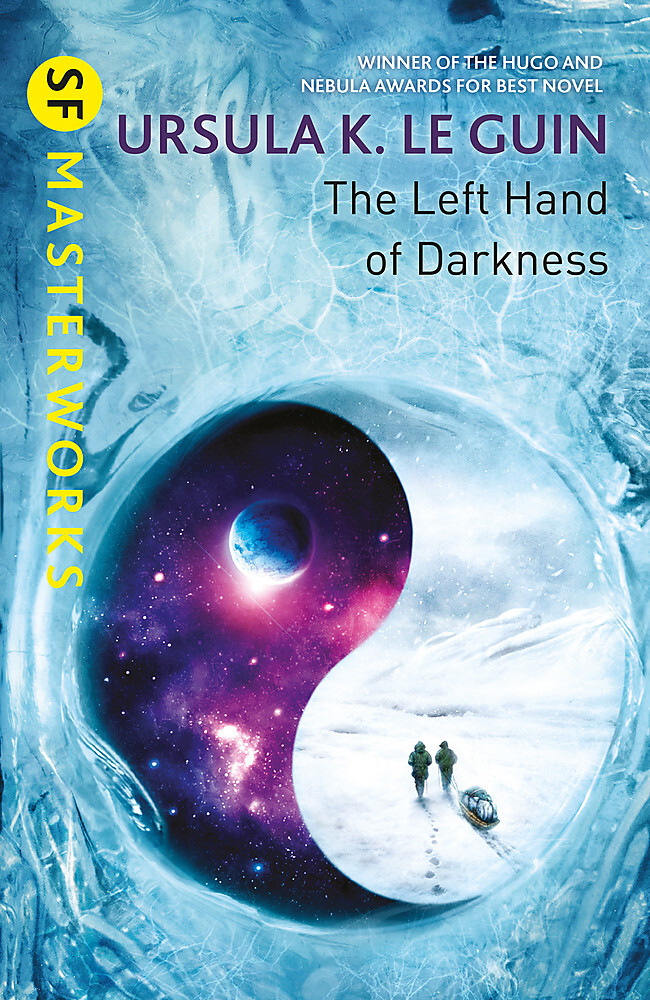
My fascinating thoughts are coming soon.
-
The Mysterious Benedict Society, by Trenton Lee Stewart
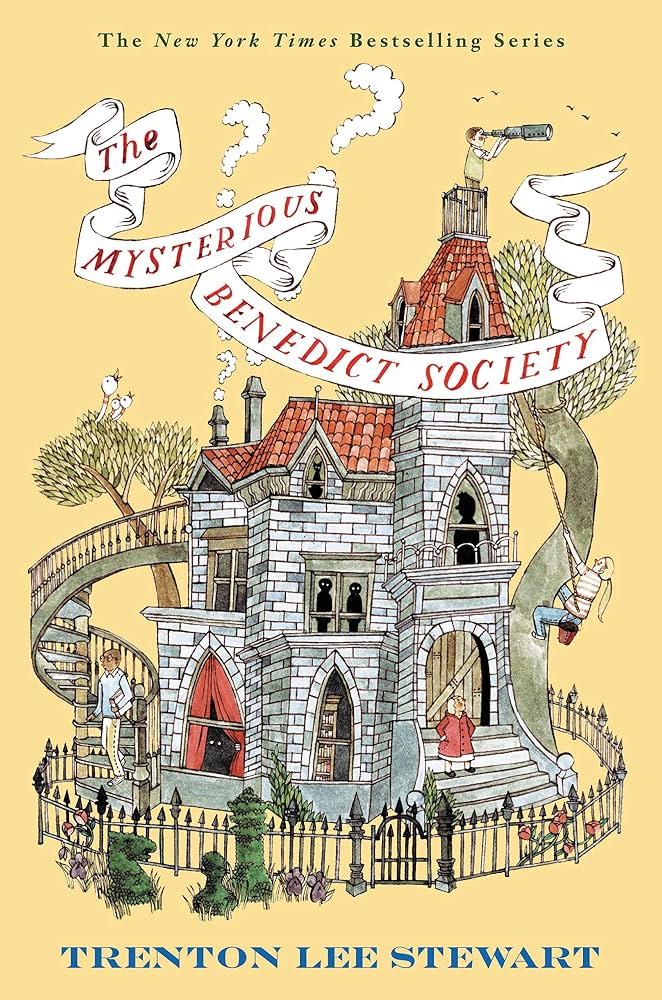
I think the best children’s books leave those who read them with some sort of idea or principle, and The Mysterious Benedict Society does exactly that. In particular, you end up believing that (a) even the most exemplary people have weaknesses, (b) you are responsible for the sort of person you become, and (c) communities are better when they are made up of individuals.
- Mr. Benedict, the genius, has narcolepsy. All-rounder Reynie constantly wrestles with loneliness and self-doubt, the mentalist Sticky with crippling anxiety, and the gymnast Kate with accepting help. Constance is precocious and wonderfully bad-tempered.
- Identical twins Mr. Benedict and Mr. Curtain are polar opposites in terms of personality.
- Despite all of its inner turmoil, the Mysterious Benedict Society is just a better community than the Learning Institute. For one, they’re more adaptable—members with specific strengths assign themselves to the tasks that suit them, so they naturally accomplish more. The Learning Institute, on the other hand, assembles its students into a colorless, structured mass, and can't adapt to anything. For another, they won!
These are fairly important values for a child to grow up with. Without (a), you might fall into a perfectionist pattern, which is generally less productive than refining your strengths; pursuing individuality, that is. Moreover, without (b), you might never find the motivation to do that. In my opinion, (c) is meant to oppose the natural tendency to “fit in,” which is itself at odds with individuality, and when taken together, (b) and (c) show that one should leap into themselves, as it were. Also, the Mysterious Benedict Society's weaknesses aren't presented as inherent to the respective member, but instead as temporary failings that can be overcome—usually with others’ help. Along with (b), this shows that a child’s future is somewhat under their control.
In short, beyond being a fun read, this book guides children (and adults, too!) to find and do what they are good at. While this might be a natural sentiment for many, it certainly wasn't for me.